
Four layers. All of them printed.
A coat is a stack. Face cloth, interlining, fill where there is one, lining. You can see the first and touch the last, and the two in the middle decide what the garment costs and how long it holds a shape. Here they all are.
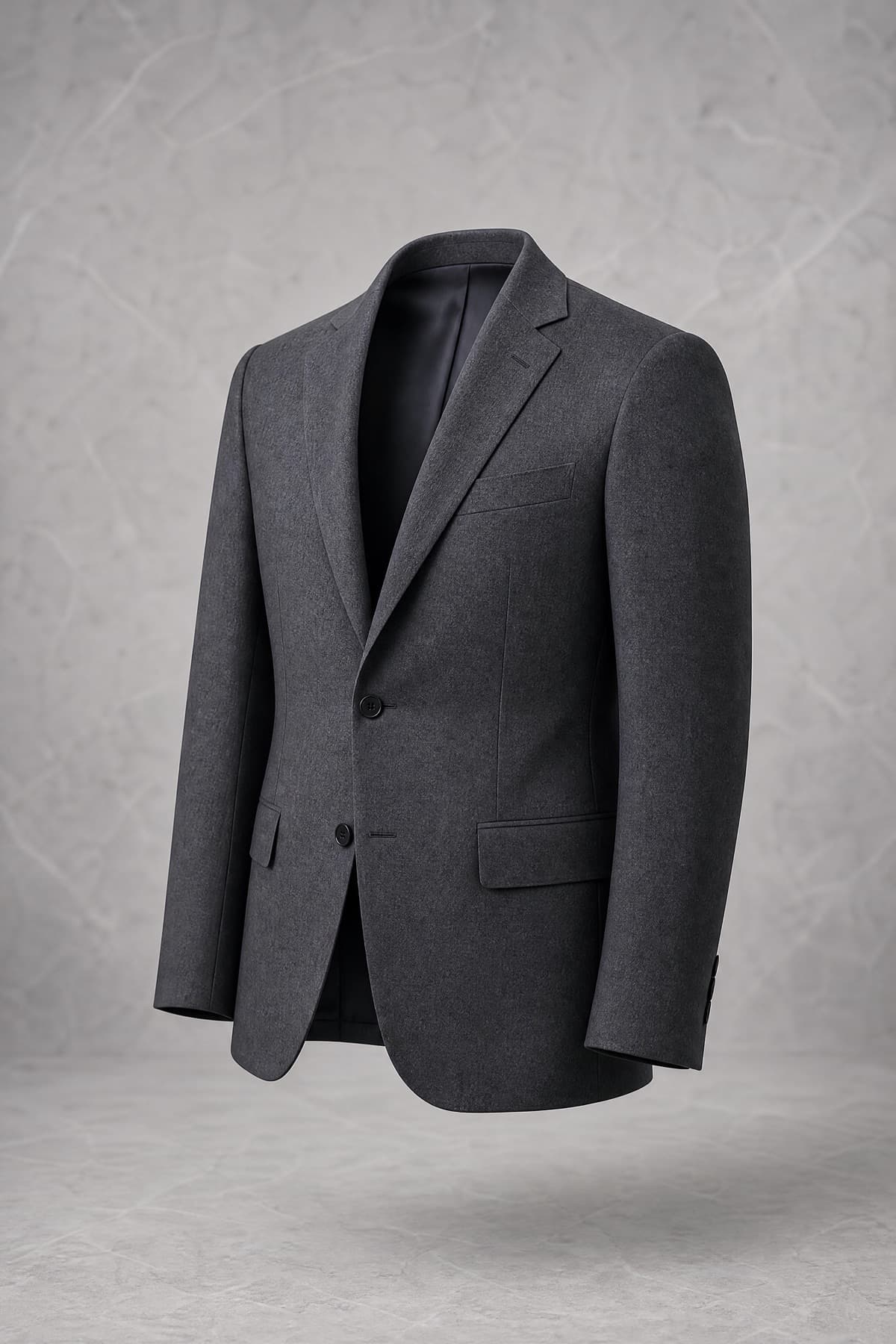
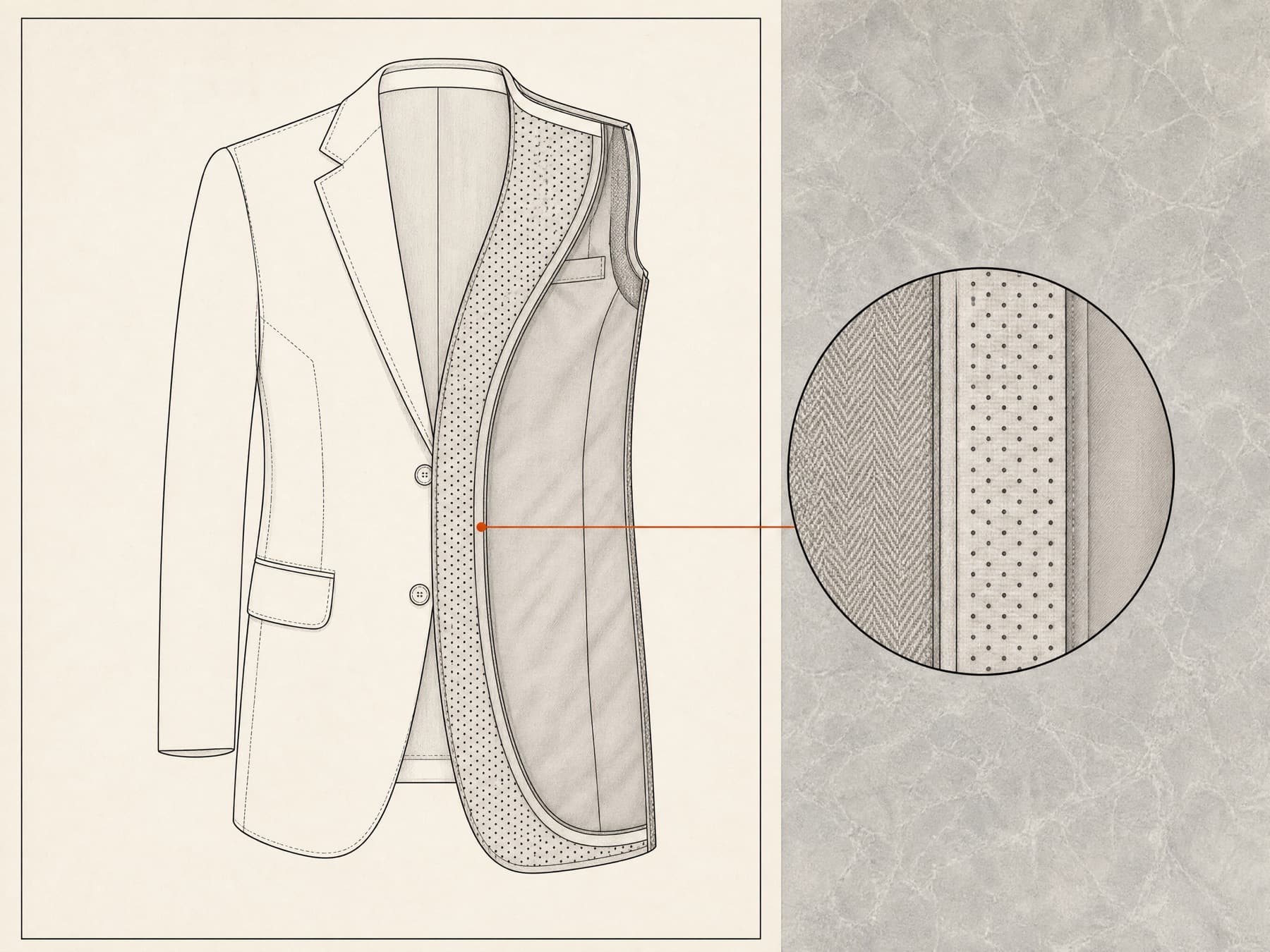
A tailored jacket, opened from the front panel.
Jacket Full Canvas, USD 498. Drag from the left and the face cloth lifts off the canvas, then the canvas off the lining. Each layer states what it is and what it changes.
Face cloth
What you see
Face cloth
- Composition (EN)
- 100% virgin wool
- Composizione (IT)
- 100% lana vergine
- Weight
- 330 gsm
- Construction
- 2/2 twill, yarn dyed
- Fabric origin
- Woven in Portugal
What this layer changes
Weight decides drape more than fibre does. The same wool at 300 gsm and at 500 gsm are two different garments — one follows the body, the other hangs off the shoulder in a column.
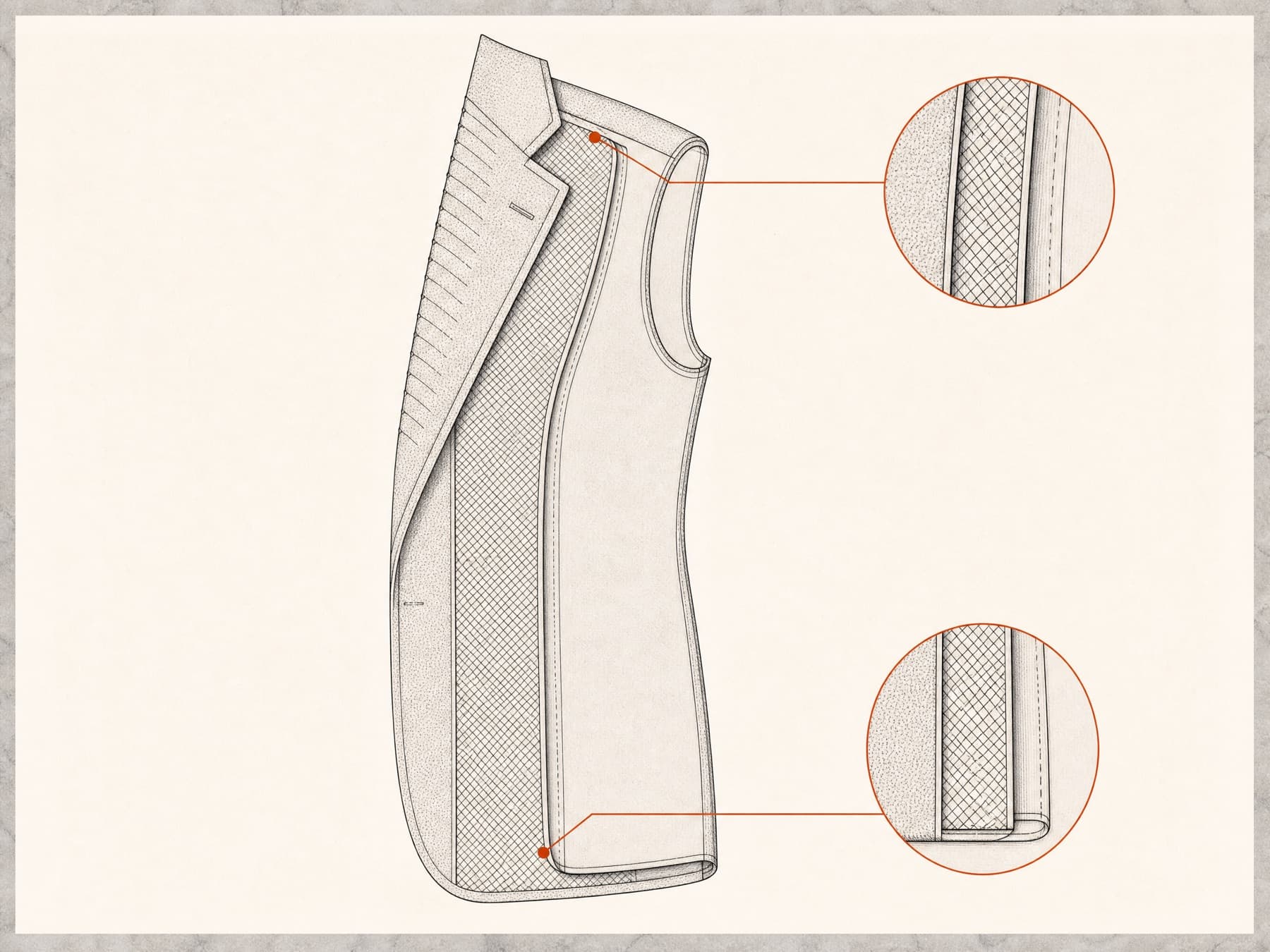
Three fronts, cut through at the chest.
Full canvas
The canvas floats the whole length and is pad-stitched through the lapel. Nothing is glued, so nothing can come unglued. The chest takes an impression of the wearer over a season and keeps it.
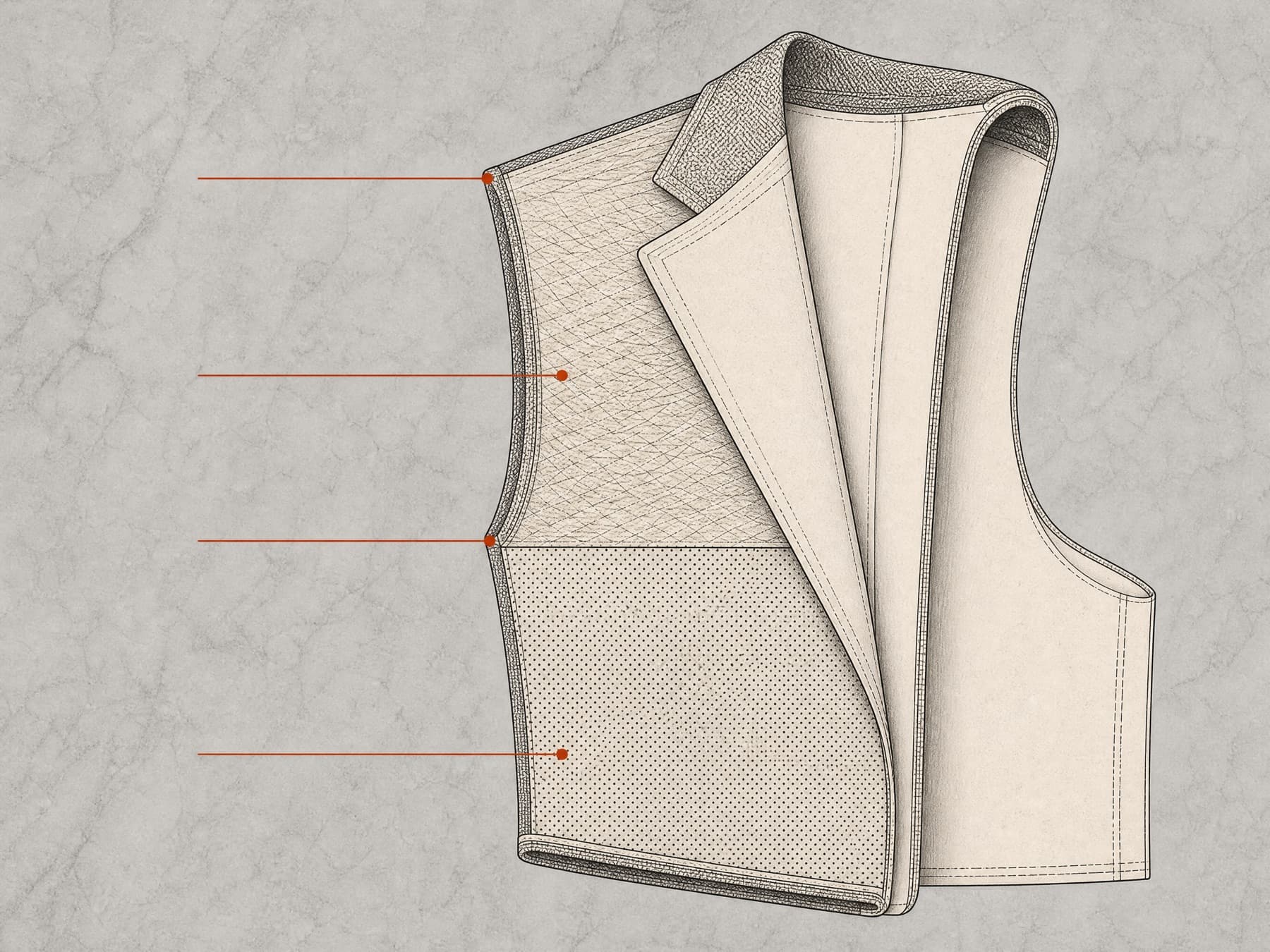
Half canvas
Canvas over the chest and lapel, bonded below. The transition point is the interesting part, and it is where this construction eventually shows its age — one half moves, the other does not.
Fusible
Interfacing glued to the back of the cloth across the whole panel. Flat and clean on day one, cheapest to make, and the only one of the three with a bond that can fail.
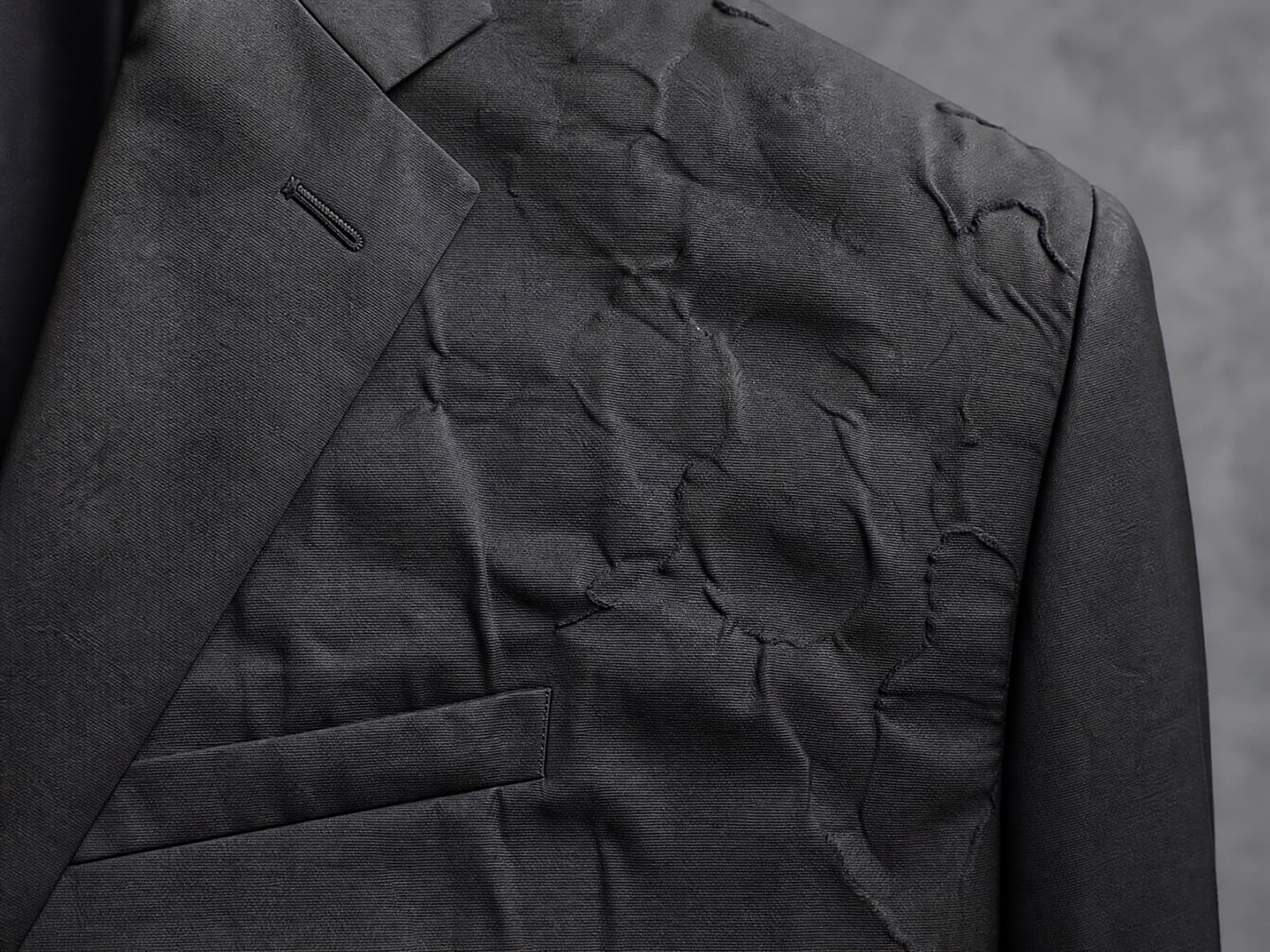
What a bond looks like when it lets go.
Solvent cleaning attacks the adhesive. It fails in patches, the face cloth lifts, and the surface ripples. It cannot be pressed out. We sell three fused garments and this photograph sits on all three of their pages.
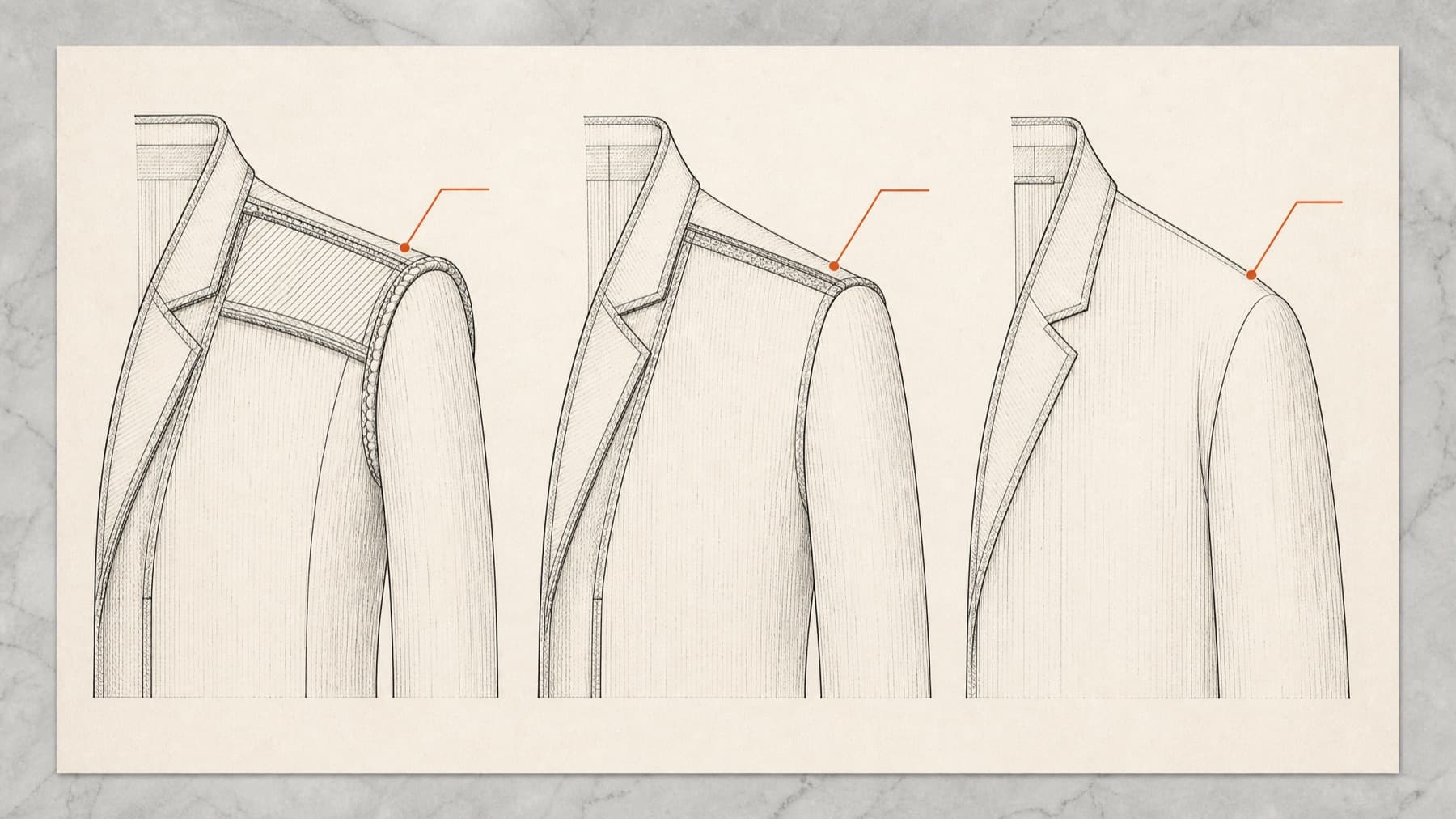
And the shoulder
Padded and roped, lightly padded and natural, or nothing at all. The first builds a line you may not have; the last follows the line you do. Neither is better — but only one of them is what you are buying, and it should say which on the page.
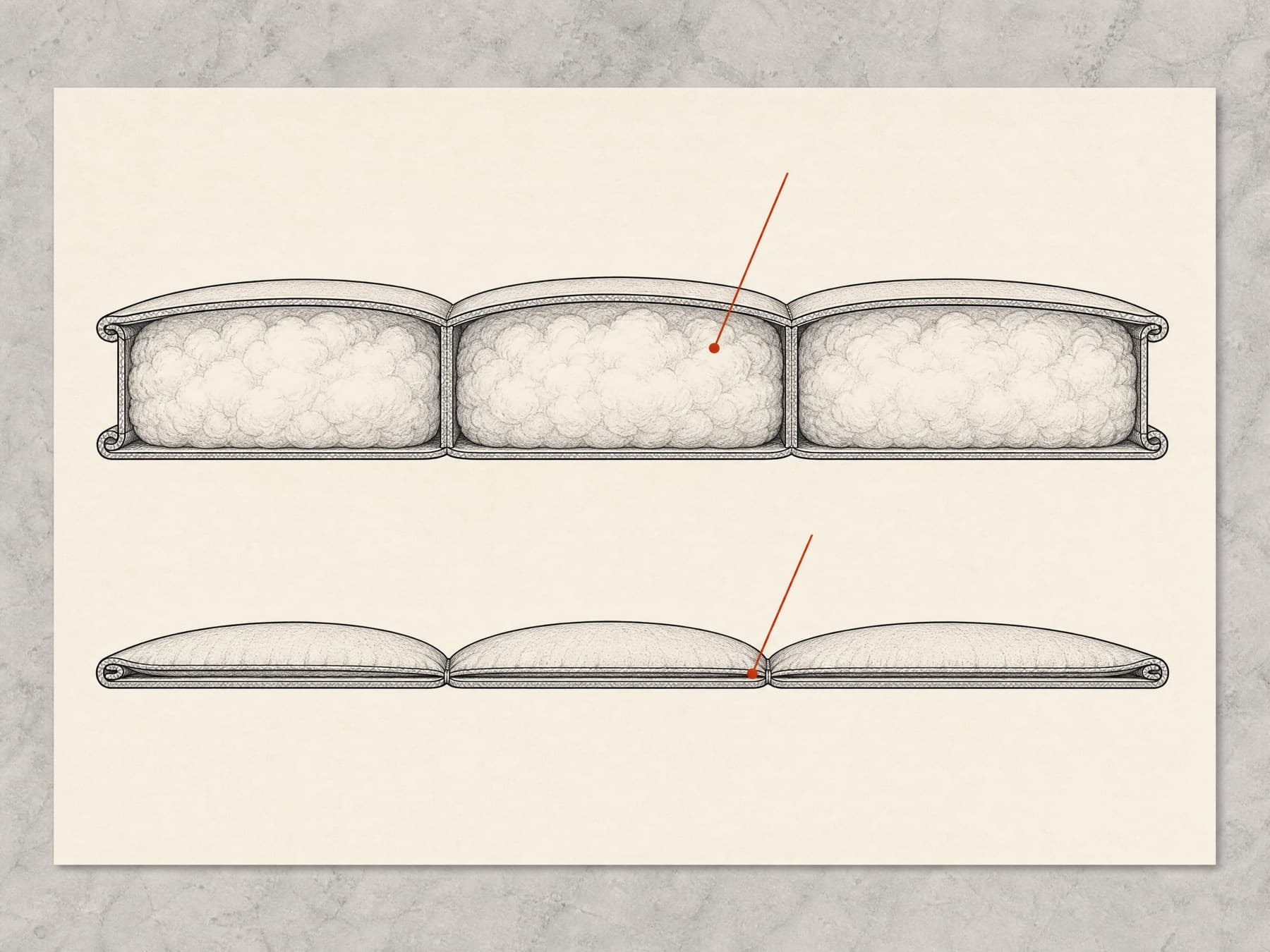
The four numbers, on the loftiest thing we sell.
Down High Fill, USD 698. Ratio, fill power with its test standard, grams in the garment, and the species of bird. Peel to layer three to see all four.
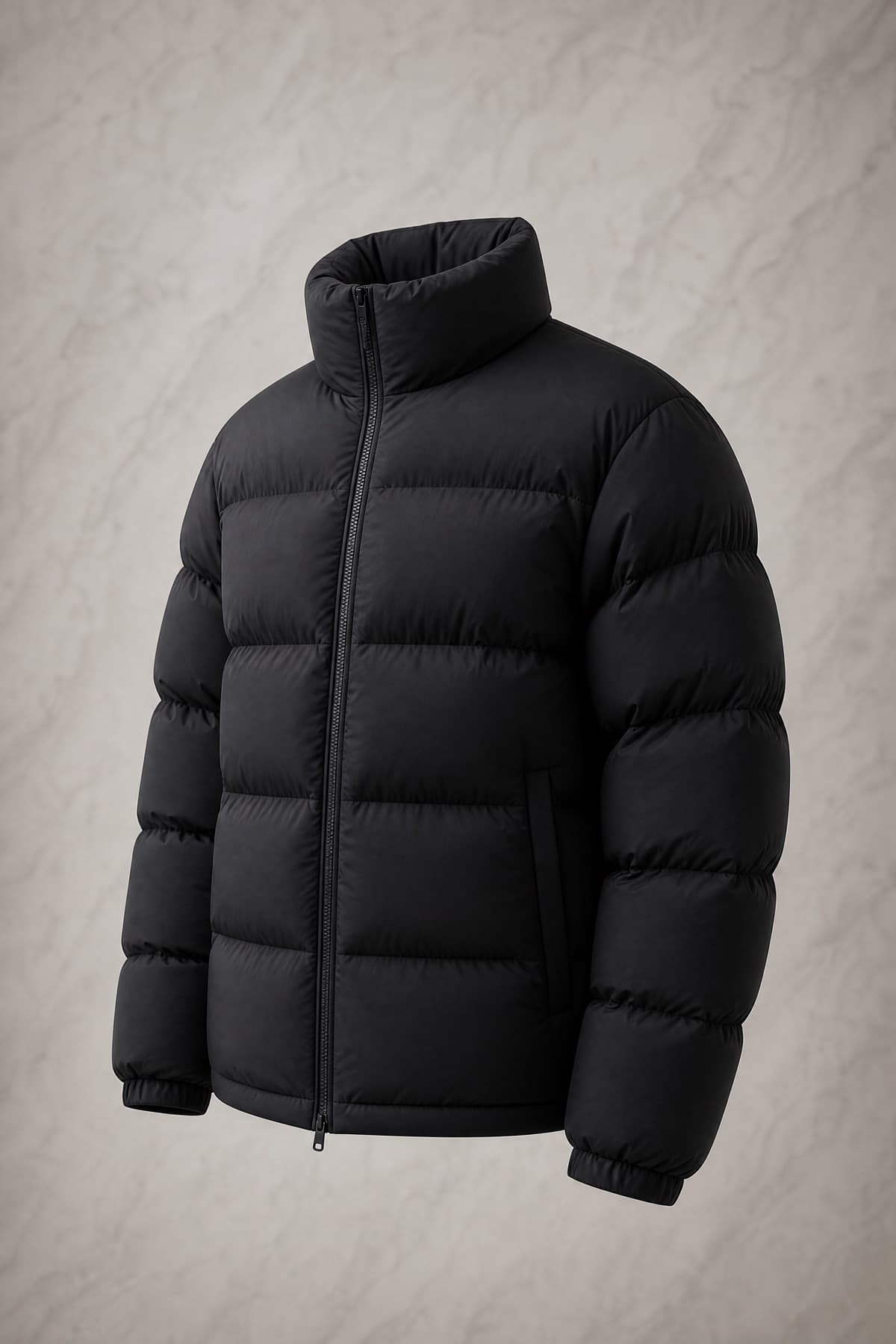
Face cloth
What you see
Face cloth
- Composition (EN)
- Shell: 100% polyamide · Fill: goose down
- Composizione (IT)
- Guscio: 100% poliammide · Imbottitura: piumino d'oca
- Weight
- 70 gsm
- Construction
- Downproof plain weave, 15 denier, matte finish
- Fabric origin
- Woven in China
What this layer changes
Weight decides drape more than fibre does. The same wool at 300 gsm and at 500 gsm are two different garments — one follows the body, the other hangs off the shoulder in a column.

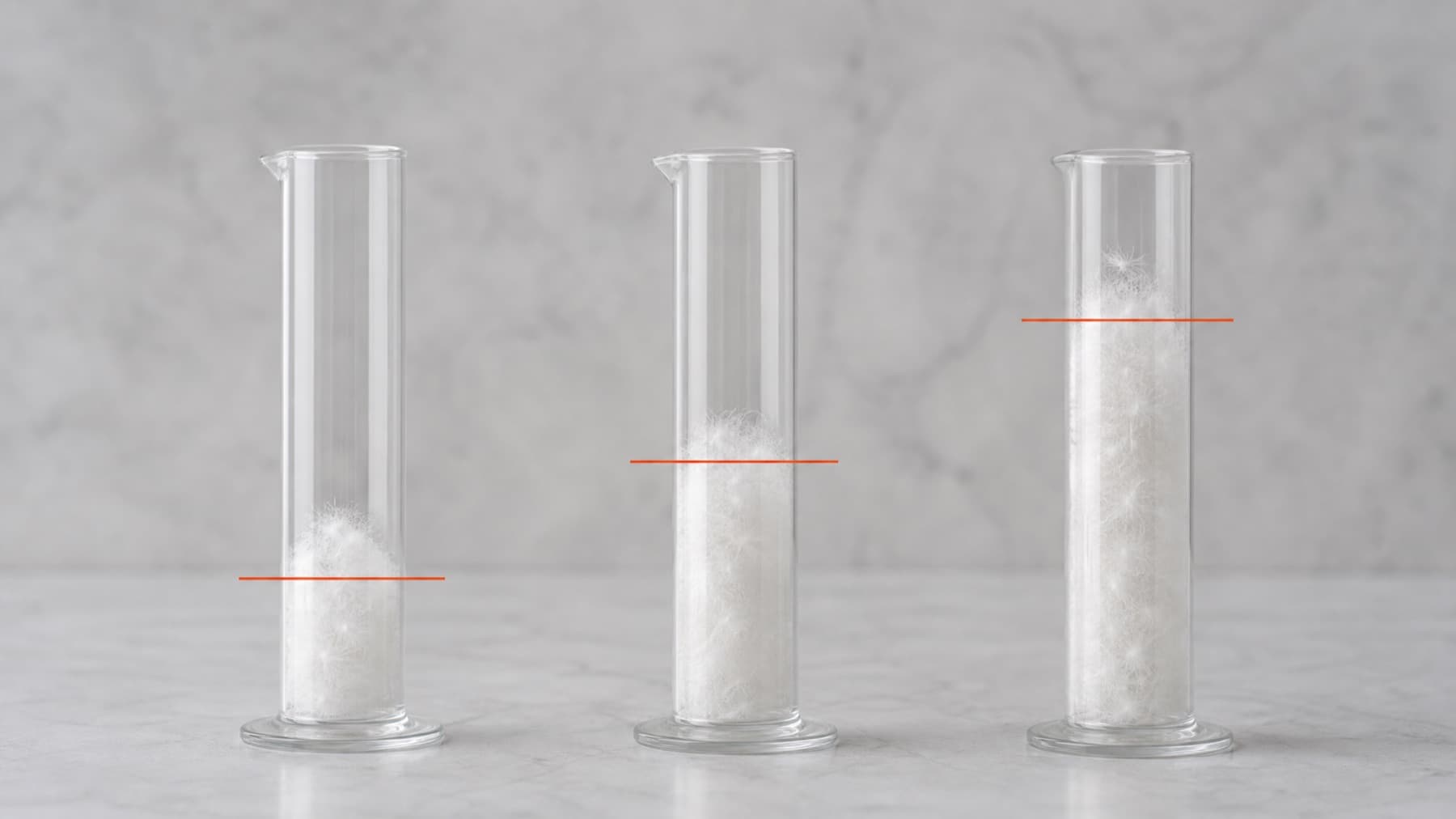
Two things the number does not mean
Fill power is not warmth
It measures how much space one ounce of down occupies, so it is warmth per gram. Our 850 jacket holds 190 g; our 750 coat holds 340 g and is warmer, and cheaper. High fill power buys the same warmth at less weight and smaller packed size.
Down is not feather
A cluster is three-dimensional and traps air. A feather has a quill and mostly adds weight. That is why the ratio is written as a percentage on every page here, and never as the word down on its own.
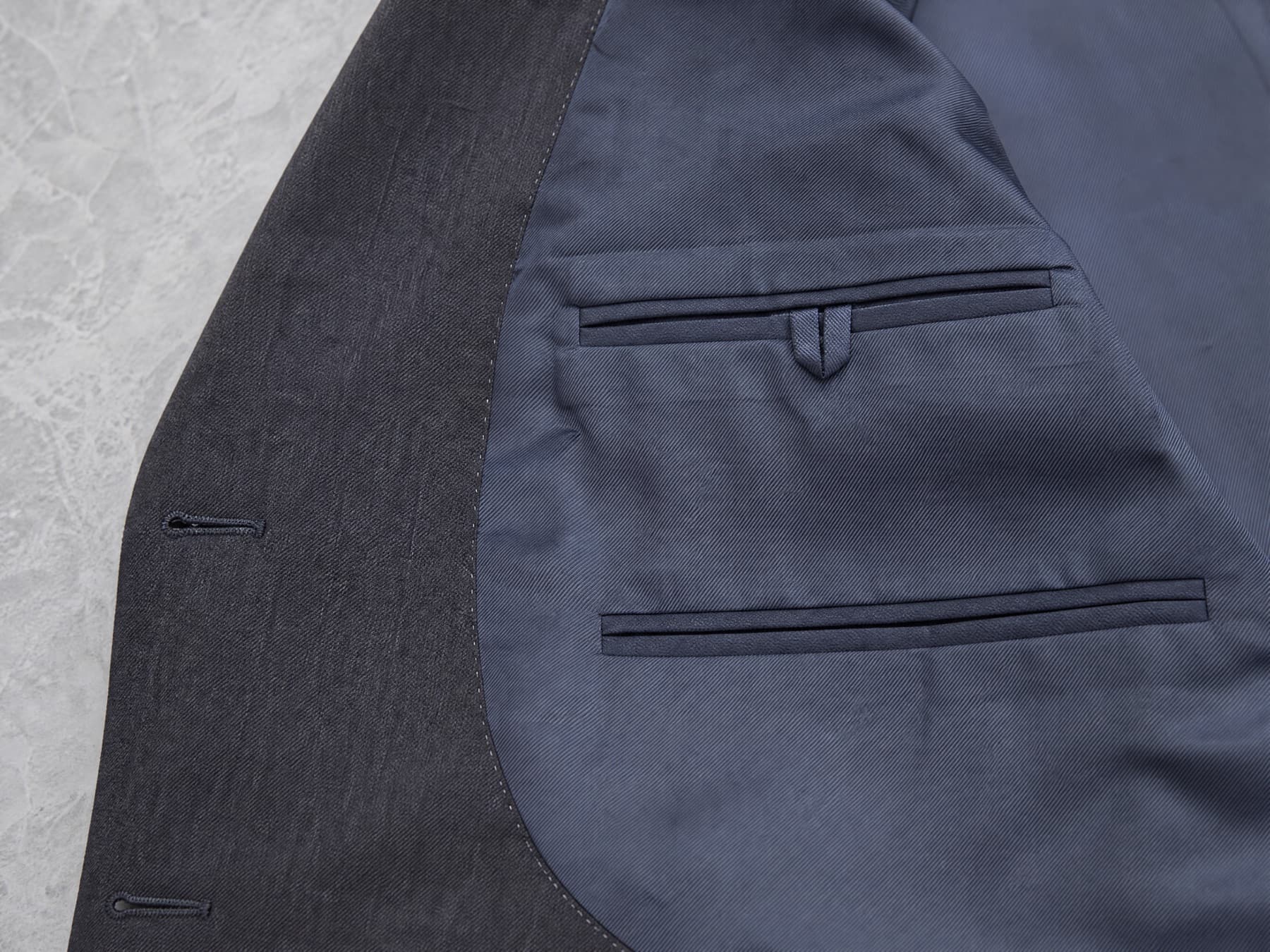
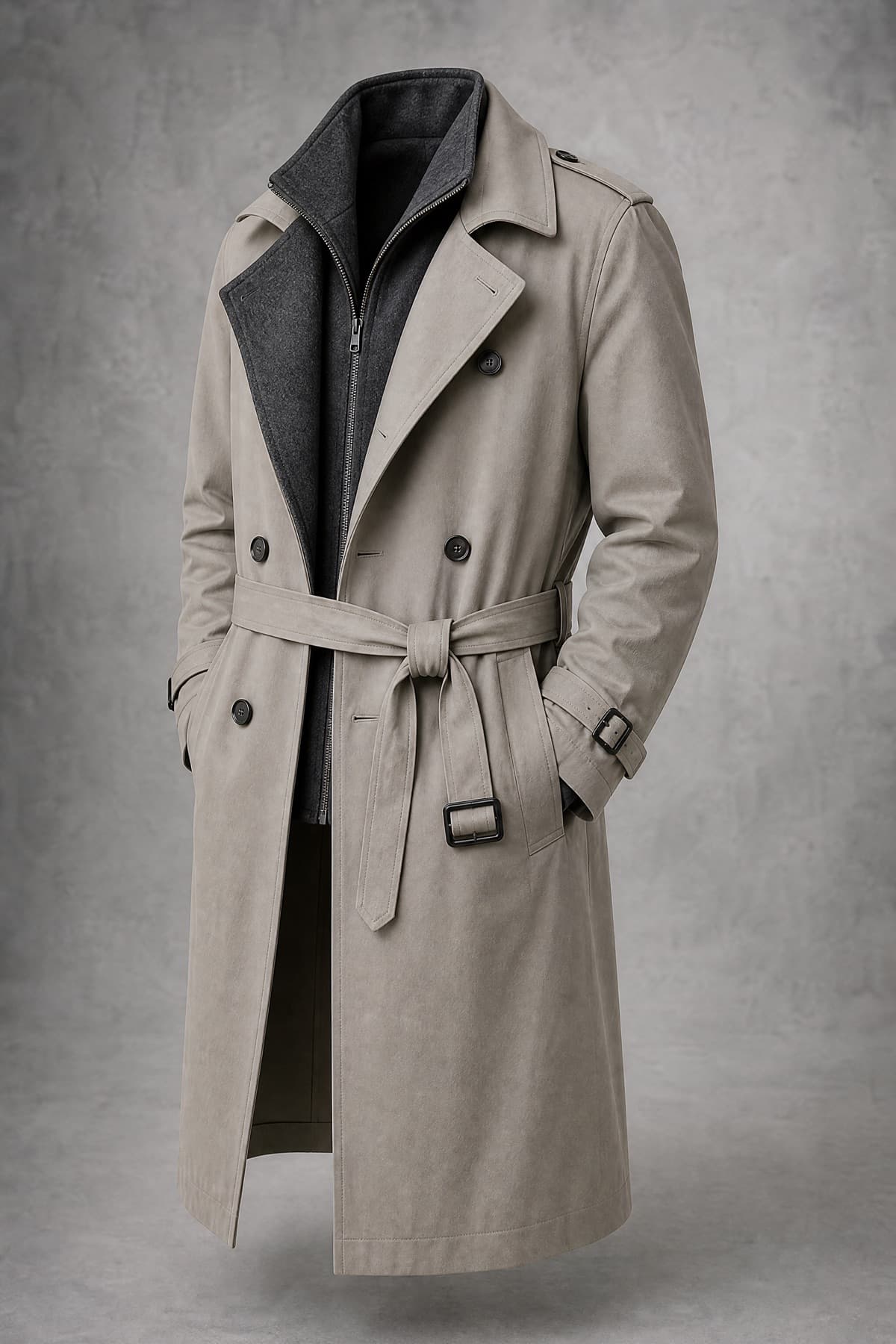
The layer you touch, and the one that buttons out.
Trench Wool Lined, USD 468. A lining is the first part of a coat to wear through and the cheapest to replace — which is exactly why it is worth knowing what you started with.
Face cloth
What you see
Face cloth
- Composition (EN)
- Shell: 100% cotton · Removable liner: 100% virgin wool
- Composizione (IT)
- Guscio: 100% cotone · Interno staccabile: 100% lana vergine
- Weight
- 290 gsm
- Construction
- Gabardine shell, 2/2 twill; brushed wool liner at 340 gsm
- Fabric origin
- Shell woven in Japan; liner cloth woven in Portugal
What this layer changes
Weight decides drape more than fibre does. The same wool at 300 gsm and at 500 gsm are two different garments — one follows the body, the other hangs off the shoulder in a column.
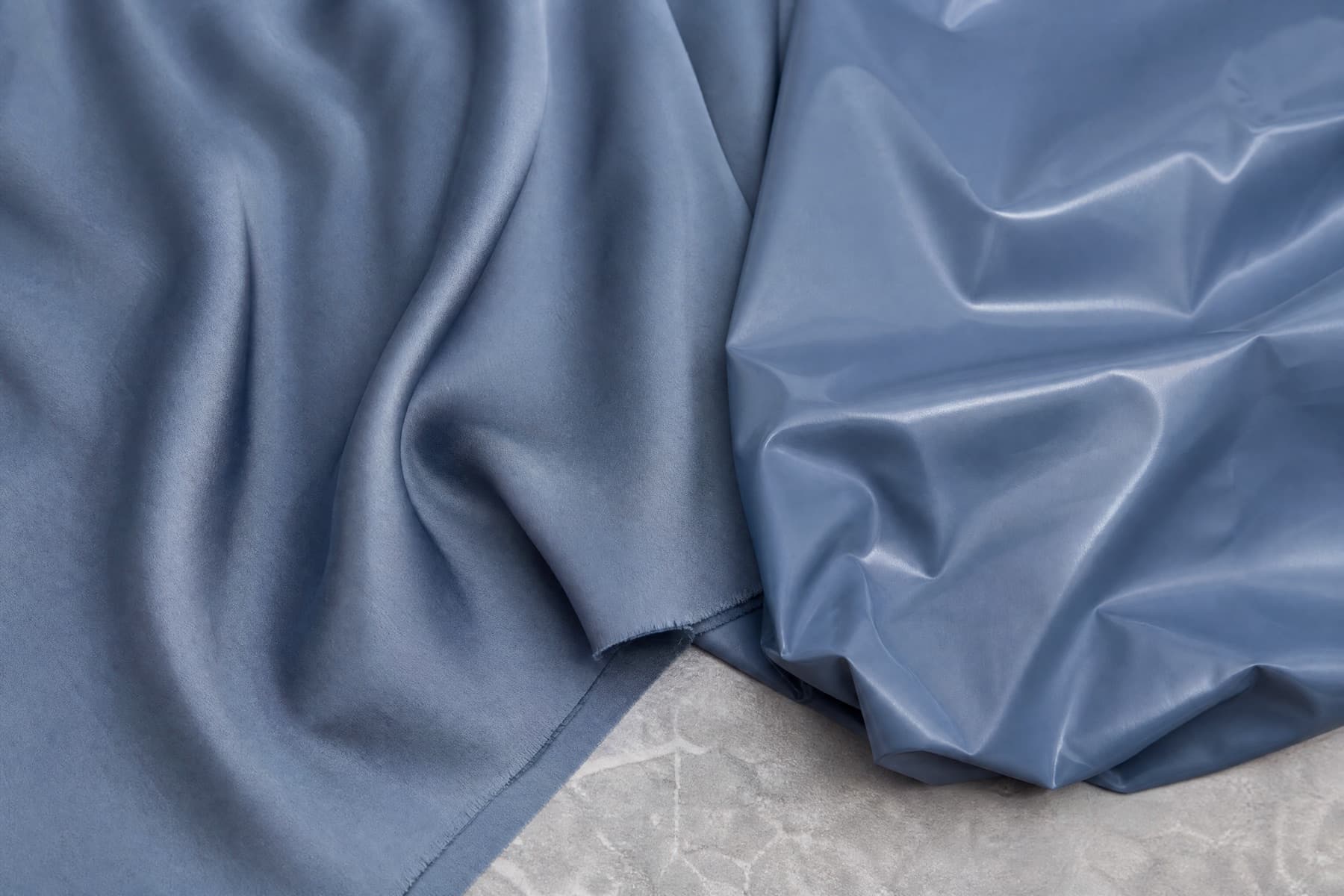
Cupro and polyester
Cupro moves air better and falls in rounder folds; polyester is harder, shinier and creases at angles. Cupro costs more to buy and more to replace. Every product page says which one you are getting.
Facing and pockets
The facing is the strip of the outer cloth that folds back down the front edge. A wide one holds the front straighter and uses more cloth. We publish its width in centimetres, because that is the number that tells you which corner was cut.
Every product page has this viewer on it.
All thirty-eight, including the fused jackets and the synthetic fills — particularly those, because the pieces with least inside them are the ones a shop is most tempted to stay quiet about.